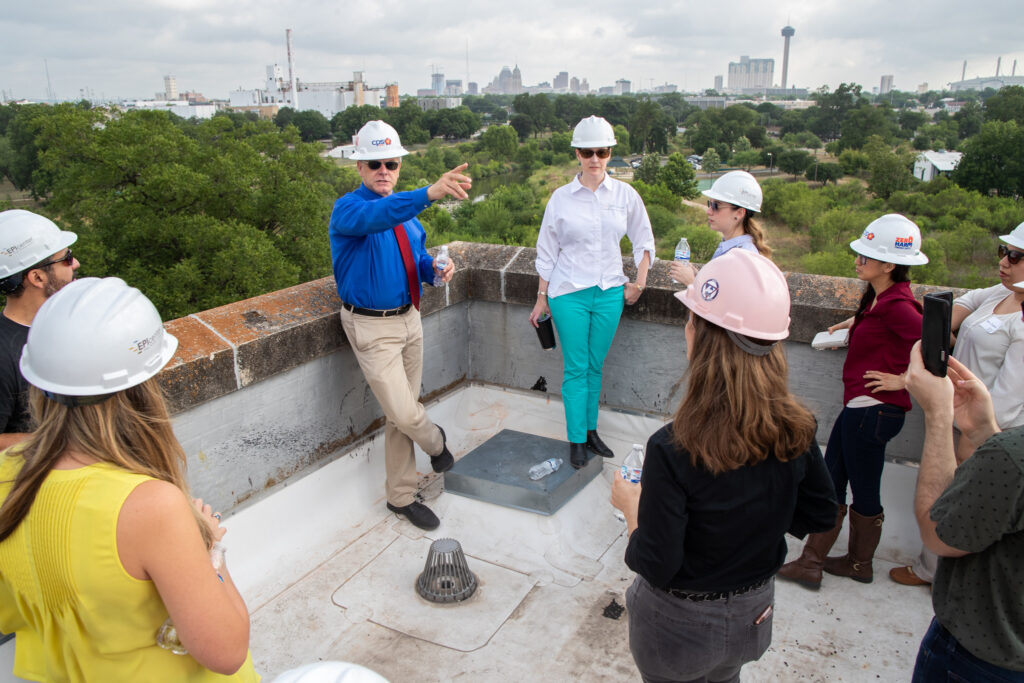
Photo credit: Vincent Michael
Advocacy
The National Preservation Partners Network advocates for issues that have national significance or impact. Examples include federal regulations and laws, federal policies and recommendations, Executive Orders, and court cases that directly impact or by precedent impact beyond a local level. All advocacy actions taken follow our Advocacy Policy.
SECTION 106 ADVOCACY ALERT
National Preservation Partners Network & Partners Submit Letter to Senators Opposing the Bipartisan American Affordability and Jobs Act of 2026 (S.5653)
October 21, 2026
Today the National Preservation Partners Network joined with other national partners to submit a letter to Senators letting them know that millions of citizens across the United States are opposed to provisions in the Bipartisan American Affordability and Jobs Act of 2026 (S.5653) that will endanger countless historic places. We asked them to do better and realize that reform is possible without destroying our nation’s heritage.
Read the letter and use the information it contains to let your Senators know Section 106 of the NHPA is often the only thing standing between historic places and the bulldozers. The Senate bill guts current protections, limits the public’s voice, and basically opens the door to Urban Renewal 2.0 levels of destruction in every community in the country. Act now! The Senate will vote on the bill on November 9th.
A PDF of the letter is available here>
READ THE FULL TEXT OF THE LETTER
Dear Senators:
On behalf of the undersigned national historic preservation organizations, we write to express profound objections to numerous provisions impacting historic preservation in the Bipartisan American Affordability and Jobs Act of 2026 (S. 5653). Our organizations represent Tribal Historic Preservation Officers; State Historic Preservation Officers; cultural resource professionals; and national, state, and local preservation organizations, as well as millions of Americans who care for the nation’s historic places.
We share the goal of efficient and more predictable federal review processes as part of federal permitting. However, achieving that goal requires substantial revisions or removal of the bill’s historic preservation provisions to ensure it addresses existing challenges without undermining historic preservation or creating new inefficiencies, uncertainty, and delays. As drafted, this bill does far more than streamline Section 106 of the National Historic Preservation Act (NHPA). It narrows what historic resources the law protects; weakens the voices of Tribal Nations, states, and communities; and inaccurately shifts accountability for project delays away from federal agencies that control most of the review process.
We Support Real Efficiency
Section 106 works because it brings federal agencies together with Tribal Nations, states, local governments, and communities before decisions are made. That consultation identifies historic and cultural resources; clarifies impacts; and produces practical ways to avoid, minimize, or mitigate harm. Consultation is often how projects avoid costly and protracted surprises later.
The overwhelming majority of Section 106 reviews are completed quickly and without controversy. Thanks to early Section 106 consultation, out of 120,000 federal undertakings reviewed annually, only about two percent result in adverse effects; and the average Section 106 review is completed within just 16 days.
We agree that clearer timelines, early coordination between stakeholders, a designated lead agency for multi-agency projects, and wider use of programmatic agreements can all make reviews more predictable. However, the legislation fails to acknowledge or address the inefficiencies and delays at federal agencies, including agency indecision, lengthy timelines, staffing shortages, and unclear direction on how to navigate the process. The bill largely ignores these problems and instead narrows the scope of review, imposes rigid deadlines on stakeholders, and penalizes the state and Tribal partners who carry out much of the work. In doing so, the historic preservation provisions in this bill will likely have the opposite effect of what is intended: more delay, more confusion, and less efficiency.
Our Principal Concerns
The bill removes many federal projects from review. The bill would redefine an “undertaking” to require a federal permit or approval plus substantial federal control and responsibility. Projects funded by federal grants or loans would mostly fall outside the Section 106 process unless the funding is for historic preservation itself. In effect, federal dollars could pay for the destruction of historic places with no public consultation. The bill also creates broad statutory exclusions, including transmission and pipeline work in existing corridors and reissued nationwide permits, rather than relying on negotiated programmatic approaches that have proven more durable.
It narrows what counts as harm. A new statutory definition of “adverse effect” would exclude most visual, atmospheric, and audible effects, temporary effects, and effects on parts of a property beyond its character-defining features. Effects tied to related past or future projects would also be excluded, and the area of potential effects would be capped in statute. For battlefields, sacred landscapes, historic districts, and multi-phase infrastructure, these limits would leave real impacts to historic resources unexamined.
It lets agencies opt out of preservation. The bill gives a federal official sole discretion to decide that other considerations outweigh historic preservation, decline prudent and feasible mitigation, and declare Section 106 satisfied. This turns consultation from a search for solutions into a procedural box to check. Mitigation outside the area of potential effects could be considered only at the applicant’s written request.
It replaces consultation with rigid clocks. Consulting parties would generally have 30 days to provide information or object, after which the agency may proceed without them. Where a SHPO, THPO, Tribe, or local government misses a deadline, the agency could reach agreement with the Advisory Council on Historic Preservation (ACHP) instead, losing local knowledge the ACHP does not have. Properties identified or listed on the National Register after review begins would not reopen the process.
It punishes partners for federal delay. SHPOs and THPOs would face evaluations every two years, audits, suspension of Historic Preservation Fund grants, and possible federal takeover of their functions if they miss timelines. Many of those timelines depend on federal reports and decisions, yet the bill sets no comparable staffing standard for federal agencies and fails to address federal agency delays that all but ensure stakeholders will not be able to comply with the new timelines. Its requirement that SHPOs, THPOs, and senior federal officials spend at least half of each workweek on any overdue review is unworkable and unsustainable.
It sharply limits judicial review. Claims would have to be filed within 150 days, courts would owe agencies substantial deference, and the usual remedy would be remand without vacatur or injunction. Projects could continue while violations are corrected, so harm may be done before the law is followed. Meanwhile, applicants would gain a right to sue over missed deadlines and obtain injunctive relief.
It undermines Tribal sovereignty and sacred places. The bill’s effect on Tribal Nations is especially troubling. It would undermine the government-to-government relationship and the federal trust and treaty responsibilities that Section 106 consultation helps fulfill.
- Unrealistic deadlines. Information about sacred sites, cultural landscapes, and traditional practices often requires consultation with elders and cultural leaders. A 30-day window rarely allows for that.
- A narrow definition of cultural places. Requiring a property of traditional religious or cultural importance to be an “identifiable geographic location or feature” may exclude places whose significance lies in an interconnected landscape.
- Federal control of Tribal programs. For the first time, the Secretary of the Interior could assume a THPO’s functions and suspend its funding. It would be a fundamental violation of the government-to-government relationship for a federal agency to seize control of a Tribal Nation’s historic preservation office.
A Pathway Forward for Permitting Reform
The expedited legislative process for the bill eliminates the opportunity for a committee process that would allow Members of Congress to address problematic historic preservation provisions and the significant risks to preserving our nation’s historic and cultural resources. To avoid a rushed process and provide ample time for considering the magnitude of these proposed changes, Congress has an opportunity to revisit this issue in the next session and ensure the legislation avoids negatively impacting historic preservation and the Section 106 process.
With additional time to consider permitting reform legislation, we would welcome the opportunity to work with Congress to ensure it includes critical components for efficiencies, maintains core principles of historic preservation, and excludes harmful provisions. In particular, we believe such a bill should:
- Keep consultation meaningful. Set clear timelines that can flex with project complexity, and require agencies to seek, consider, and respond to input from Tribal Nations, SHPOs, local governments, and the public.
- Keep the scope of Section 106 intact. Do not redefine “undertaking” or “adverse effect” in ways that exclude federally funded projects or visual, atmospheric, audible, and cumulative effects. Address recurring activities through negotiated programmatic agreements rather than categorical statutory exclusions.
- Remove the unilateral opt-out. Require transparency and accountability whenever an agency finds that other considerations outweigh historic preservation.
- Respect Tribal sovereignty. Drop federal assumption of THPO functions and federal THPO qualification standards, allow time for culturally appropriate consultation, and revisit the definition of properties of traditional religious and cultural importance with Tribal Nations.
- Match accountability with capacity. Replace penalties on SHPOs and THPOs with requirements that federal agencies keep qualified preservation staff, and fund SHPOs, THPOs, agencies, and the ACHP to meet faster timelines, including technology investment for SHPOs as well as THPOs.
- Preserve meaningful judicial review. Keep an effective path for courts to ensure agencies follow the law before irreversible harm occurs.
Congress can make permitting more efficient and predictable without making historic places invisible. As we celebrate the 60th anniversary of the National Historic Preservation Act and its positive impact, we urge you to work with the preservation community, Tribal Nations, states, and local governments to achieve permitting reform legislation that avoids undermining our nation’s historic and cultural resources, and we stand ready to assist.
Sincerely,
American Cultural Resources Association
Asian & Pacific Islander Americans in Historic Preservation
Latinos in Heritage Conservation
National Alliance of Preservation Commissions
National Association of Tribal Historic Preservation Officers
National Conference of State Historic Preservation Officers
National Preservation Partners Network
National Trust for Historic Preservation
Preservation Action
Society for American Archaeology
Society for Industrial Archeology
The Archaeological Conservancy
The Association for Preservation Technology International
SECTION 106 ADVOCACY ALERT
Call to Action – Senate Permitting Reform Bill Introduced
October 6, 2026
The Senate’s new permitting bill (S. 5653 – American Affordability and Jobs Act of 2026) would make the biggest changes to Section 106 since 1966, and preservationists need to speak up now. Section 106 has guaranteed local communities, Tribes, and preservation experts a voice in federal projects that affect the places they care about. This bill would narrow which projects get reviewed and which harms count. It would put tight deadlines on public input, let agencies skip mitigation at their own discretion, and make it harder for communities to challenge bad decisions in court. All of this is aimed at a process that, in 40 surveyed states, completes reviews in an average of just 16 days. The bill won’t get a vote until November 9th, so there is still time to act. Contact your senators and tell them that faster permitting doesn’t have to come at the cost of our history and our communities’ voice.
Here are resources to support your advocacy efforts:
Section 106 Under Threat | National Trust for Historic Preservation
Section 106 Under Threat Updates | National Trust for Historic Preservation
Senate Proposal Does More Than “Streamline” Section 106 – NCSHPO
NAPC Section 106 Resource Center
Defend Section 106 – Cultural Heritage Partners, PLLC
106Strong Coalition Webinar on the Bipartisan American Affordability and Jobs Act (October 5, 2026)
SECTION 106 ADVOCACY ALERT
NPPN Publishes Position Statement: Opposition to Proposed Changes to Section 106 of the National Historic Preservation Act
July 23, 2026
| Who We Are The National Preservation Partners Network (NPPN) is a coalition of more than 160 statewide and local preservation organizations working alongside State Historic Preservation Offices, Certified Local Governments, and Tribal partners to protect historic and cultural places in communities across the country. Our members work directly with the Section 106 process on a daily basis — advising project sponsors, sitting at the consultation table, and helping communities and federal agencies reach outcomes that work for everyone. We offer this statement as practitioners with on-the-ground experience with the process and who represent hundreds of communities and thousands of Americans who value and want to protect our nation’s historic resources. Summary The existing Section 106 process reduces conflict, identifies problems early, creates predictable outcomes, and avoids costly litigation. It is a process that works — not despite its consultation requirements, but because of them. The National Preservation Partners Network (NPPN) therefore opposes the draft rewrite of 36 C.F.R. Part 800 — the regulations implementing Section 106 of the National Historic Preservation Act (NHPA) — that was circulated by the Vice Chairman of the Advisory Council on Historic Preservation (ACHP) on July 17, 2026, for an expedited Council vote by July 24, 2026. NPPN urges the ACHP to withdraw the draft, restore the deliberative process it previously committed to, and preserve the collaborative consultation framework that has worked for sixty years.NPPN believes the proposed rule, both in the manner of its introduction and in its substance, is an unwarranted departure from the collaborative, multi-party consultation model that Congress established when it enacted the NHPA. NPPN calls on the Advisory Council on Historic Preservation to: Withdraw the current draft and restore the previously adopted 30/60-day process for developing and reviewing any revisions to Part 800.Reject an unassembled, one-week vote on a rule of this magnitude, and instead ensure Council deliberation occurs in a transparent, recorded public forum.Preserve the core consultative structure of Section 106 rather than replacing it with a model of unilateral agency control.Engage Tribal Nations through genuine government-to-government consultation on any changes affecting places of religious and cultural significance.Engage with the broader preservation community and the public in order to improve the Section 106 process without endangering or destroying historic places. ——————————————————————————————————– Background For six decades, Section 106 has required federal agencies to identify historic properties, consult with State Historic Preservation Officers (SHPOs), Tribal Historic Preservation Officers (THPOs), Tribal Nations, local governments, and other interested parties, and consider alternatives before undertakings that affect historic properties move forward. It has never functioned as a veto over federal projects; rather, it has provided a structured process for balancing infrastructure, energy, housing, broadband, and disaster-recovery needs against the preservation of the nation’s irreplaceable historic and cultural resources. Earlier this year, the ACHP adopted a resolution directing its staff to develop a public timeline for revising Part 800 within 30 days and to give Council members 60 days to submit comments before any regulatory action proceeded. That process was never completed. Instead, on the afternoon of Friday, July 17, 2026, the Vice Chairman distributed a nearly complete rewrite of the regulations and asked Council members to cast an unassembled, email-based vote within one week — abandoning the process the Council itself had adopted. The Council set a deadline of Friday, July 24, 2026, for that vote; the National Trust for Historic Preservation, the National Conference of State Historic Preservation Officers (NCSHPO) and the National Association of Tribal Historic Preservation Officers (NATHPO), Council members, have already voted no. If approved, the draft will move to the Office of Information and Regulatory Affairs (OIRA) for review before publication in the Federal Register, triggering a 30-day public comment period. ———————————————————————————————————– Why Section 106 Benefits Everyone — Not Just Preservationists Section 106 is not an obstacle that pits preservation against progress. In practice, it does the opposite. Section 106 works because it creates better projects: earlier identification of issues, fewer late-stage surprises, negotiated solutions, greater public confidence in federal decision-making, lower litigation risk, and greater certainty for project sponsors. Federal agencies, applicants, local governments, Tribal Nations, and the public all rely on the same process to get to “yes” on projects that serve infrastructure, energy, housing, and disaster-recovery needs. Weakening that process does not make federal projects move faster or cost less — it removes the mechanism that prevents costly conflicts and litigation from happening. Key Concerns with the Proposed Rule A shift from consultation to unilateral agency control. The draft replaces the collaborative consultation process with a single Section 106 report prepared by the federal agency, which would then be circulated for comment. SHPOs, THPOs, Tribes, local governments, other consulting parties and the public would have to react to a completed agency analysis rather than helping shape it — removing a substantive planning process. Agencies would decide unilaterally whether competing priorities, such as budget and schedule, outweigh historic preservation concerns. Narrowed participation. State and local governments and Certified Local Governments would no longer be entitled to consult, and preservation organizations and members of the public would lose recognized status. Public involvement would become discretionary, with agencies deciding whether public input is worth the time and cost. Collaborative, negotiated solutions would be lost. Broad new exclusions from review. The proposal would exempt whole categories of projects — including state or locally administered federal programs, actions involving minimal federal funding or control, and projects carried out under delegated authority. It would align many NEPA exclusions with Section 106, removing review of projects that currently receive it. A narrowed definition of “effect.” The draft limits adverse effects to those that are foreseeable, closely tied to the undertaking, and involve material physical alteration. This curtails consideration of setting, visual impacts, and other indirect effects, and raises serious questions about how places of Tribal religious and cultural significance would be protected. A narrowed definition of “historic property.” The proposal excludes certain cultural landscapes — mountains, valleys, and ethnographic landscapes — from protection. Combined with the loss of Traditional Cultural Landscape protections and the elimination of “avoidance, minimization, and mitigation” as an operating standard, these changes will reduce protection for Tribal sacred sites and Traditional Cultural Properties and disregard practical, positive alternatives that preservation review makes possible. Mitigation becomes optional. The current process encourages negotiated Memoranda of Agreement among consulting parties. The proposed rule makes Memoranda of Agreement optional and allows agencies to make unilateral decisions without the agreement of consulting parties, likely leading to conflict. Legal vulnerability and more delay, not less. The proposed regulations contradict both the National Historic Preservation Act and ACHP’s own rules and procedures. The internally inconsistent draft contains many errors, inviting regulatory confusion. Stripped of the well-established consultation process that has long produced negotiated, durable outcomes, agencies and applicants should expect more legal challenges and delays, not less — undermining the efficiency the proposal claims. The draft is a complete rewrite that places decision-making authority in the very agency proposing the undertaking. It discards the independent expertise SHPOs, THPOs, Tribal Nations, local governments, and the public bring to federal decisions. Conclusion Section 106 has succeeded for sixty years not despite its consultation requirements, but because of them. NPPN urges the ACHP to reject an accelerated, closed-door process for rewriting regulations and to engage the full preservation community — Tribes, SHPOs, state and local governments, preservation organizations, and the public — to uphold, rather than dismantle, Congress’s intent in enacting the National Historic Preservation Act. The National Preservation Partners Network’s opposition to this draft is not opposition to reform. NPPN stands ready to participate in a collaborative review that improves efficiency, provides greater clarity, reduces delay, maintains consultation, honors Tribal sovereignty, preserves public participation, and fulfills Congressional intent. We welcome the opportunity to work with the ACHP to that end. |
Call to Action: Help Save Section 106
| NPPN encourages its members and the broader preservation community to: – Track the rulemaking closely and prepare to submit substantive comments once the rule is published in the Federal Register. – Contact their Members of Congress to express concern about the proposed rule and the process by which it was introduced. – Contact their State Governors to express concerns about the proposed rule and point out that it limits states’ rights to protect their historic resources. – Share this information with your members and supporters and ask them to contact their state and local leadership. – Contact your State Historic Preservation Officers, Tribal Historic Preservation Officers, and state and local elected officials to coordinate a unified response. – Submit written comments during the forthcoming public comment period via regulations.gov once the docket number is available. |
Resources:
Cultural Heritage Partners’ War Room Resources
National Trust for Historic Preservation Advocacy Resources
The National Conference of State Historic Preservation Officers News
This Is Historic.
As historic preservation groups mark milestones in the history of our country and the movement, we face unprecedented federal challenges to historic places, narratives, and policies. Whether celebrating or advocating, we’ll make the most of our efforts if we speak with a unified voice.
We can do that with This Is Historic, a simple tagline chosen by a national coalition of preservation organizations among more than 90 submissions.
Add This Is Historic to your messaging throughout the year and beyond. It’s flexible enough to use however it works for you (see examples):
- Mark this moment in our history
- Celebrate historic places, people, events, in your community
- Advocate for programs, places, policies, and narratives compromised by the federal government
Learn More and Download the This Is Historic Toolkit
NPPN Joins Coalition of Nonprofit Organizations to File Amicus Curiae Brief in White House Ballroom Case
May 27, 2026
Eleven national and local nonprofit organizations devoted to architecture, landscape, historic preservation, planning, and National Parks stewardship have joined together in filing an amicus curiae (“friend of the court”) brief supporting the National Trust for Historic Preservation in its lawsuit over the proposed White House Ballroom. The litigation challenges the Trump Administration’s demolition of the White House East Wing and ongoing construction of a massive new ballroom structure on the historic White House grounds, a designated National Park.
A preliminary injunction granted to the National Trust by U.S. District Court Judge Richard Leon on March 31, 2026, has been stayed by the U.S. Court of Appeals for the District of Columbia Circuit pending an appeal by the Trump Administration. A hearing before a panel of the Circuit Court is scheduled for Friday, June 5, 2026.
In the brief, the amicus organizations make a number of points, including the following:
– Each president is but a temporary steward of the White House, and no president has the inherent right to destroy any portion of the White House complex or undertake a huge construction project such as this without obtaining express approval from the Congress. No such authority has been granted in this case.
– The historical record shows that virtually every other major White House project over the years has been carried out with approval and engagement by Congress. The Administration’s attempt to evade or usurp this authority should not be allowed to succeed.
– Despite the government’s recent assertions, the case is not about national security. It is simply about whether the President has complied with the law in his longstanding quest to construct a massive ballroom structure at the White House.
– The fact that private donors are supposedly paying for the project does not give the President any special authority to carry it out.
– The White House and its surrounding cultural landscape constitute a National Historic Landmark of highest significance to the nation, as well as a designated National Park. Not only has the Administration failed to secure basic congressional approval for this project, but it has also ignored planning and preservation standards and principles specifically established to ensure that changes to the White House and its grounds respect its cultural and historic values.
– Given the significant issues brought in this case, the balance of equities, and the likelihood that the National Trust will ultimately prevail on the merits, the Court of Appeals should reinstate the preliminary injunction and halt further construction of the ballroom project.
The 11 organizations participating as amici curiae include the following:
The American Institute of Architects
The American Society of Landscape Architects
The Association for Preservation Technology International
The Coalition to Protect America’s National Parks
The Committee of 100 on the Federal City
The Cultural Landscape Foundation
The DC Preservation League
The National Mall Coalition
The National Preservation Partners Network
The Olmsted Network
The Society of Architectural Historians
National Preservation Partners Network
Statement on Recent Federal Actions Impacting Historic Preservation
March 20, 2025 – As a community of historic preservation nonprofit organizations across the U.S., the National Preservation Partners Network is deeply concerned about federal actions that have already damaged—and could easily destroy—efforts to tell America’s story through our shared cultural heritage.
The processes, tools, and services mandated by the 1966 National Historic Preservation Act have been strongly supported by every administration since its creation. Why? Historic places matter to the American people. They help define who we are as Americans. They anchor communities across the nation: rural and urban, thriving and surviving, red and blue. Everyone can find a historic place of meaning and memory, a place that connects us with our shared past and with each other. A common concern for preserving our history, and the places where that history occurred, has brought citizens and communities together and helped create the national historic preservation infrastructure we rely on today.
The National Historic Preservation Act established a comprehensive program to protect historic and archeological sites. It created the National Register of Historic Places, the Section 106 review process, the Section 110 program, the Advisory Council on Historic Preservation, State Historic Preservation Offices, and the Historic Preservation Fund. These initiatives have served the nation well for nearly six decades
The economic and community benefits of preserving and reusing historic places are supported by irrefutable data demonstrating that modest federal investment generates strong federal and local tax revenue and creates thousands of good jobs. Using historic places to illustrate the unique impact of both everyday and exceptional Americans brings us together, educates and inspires us, and fosters civic pride in the places we all call home.
The Partners Network is concerned that unprecedented actions and positions taken by the Trump administration since January 2025 reflect a misunderstanding of what preservation is about, the benefits it provides, and the mechanisms in place to support this cost-effective public benefit. The administration’s staffing, funding, and policy changes and proposals will not save money. In fact, they will cost us dearly—financially, socially, and historically.
Despite decades of bipartisan support, the national historic preservation infrastructure is highly threatened by recent actions by the administration, including:
Drastic cuts to staffing and funding at the National Park Service—The central federal agency supporting historic preservation has suffered severe reductions in staffing and funding, undermining preservation efforts nationwide. This in turn jeopardizes historic rehabilitation projects that create jobs, provide housing, and revitalize communities. Without adequate resources, the programs mandated by Congress to facilitate historic preservation will falter, leaving critical initiatives unsupported.
Freezes and cuts to multiple sources of federal preservation funding, including the Historic Preservation Fund—these funding streams are essential for government agencies and nonprofits working to save America’s historic places. Uncertainty or reductions in these funds have already stalled or endangered vital projects across the country.
Executive Orders and policy changes curtailing efforts to preserve and share the history of underrecognized communities— Efforts to ensure that all Americans see their history reflected in our preserved heritage are critical to national unity and identity. Weakening these initiatives risks leaving important stories untold and communities unseen.
The declaration of a “National Energy Emergency” despite record-high American energy production—This action has disrupted the Section 106 review process, which is crucial for protecting historic resources, and has added delays and costs to public and private projects across the country.
The dismissal of appointed leadership at the Advisory Council on Historic Preservation—Without appointed leadership, and the ability to even act, this independent agency cannot meet its federally mandated responsibilities.
Staffing cuts at the General Services Administration—These reductions greatly hinder the agency’s ability to protect historic federal buildings that belong to the American people.
The censure and erasure of American history through the removal of language, websites, archives, and other resources that belong to the American people and tell our full story.
We do not oppose greater efficiency. Yet the seemingly haphazard approach to terminating experienced personnel, freezing or discontinuing committed preservation funding, and selling publicly treasured properties without stakeholder input, will result in a loss of historic places valued by local communities across the country.
We urge the administration and Congress to take immediate action to reinstate the funding and staffing essential for protecting our nation’s historic and cultural assets.
We also call upon them to reverse actions that have weakened the Advisory Council on Historic Preservation and disrupted efforts to document and celebrate the history of underrepresented communities.
We urge all citizens who value historic preservation to contact their federal representatives and advocate for the restoration of critical programs and resources.
Advocacy Resources
- Visit Preservation Action to sign up for legislative updates, learn how to lobby, and read briefing papers.
- Visit the National Conference of State Historic Preservation Officers to learn about the Historic Preservation Fund, the Economics of Historic Preservation, and how SHPOs carry out the work of the national historic preservation program.
- Visit the National Trust for Historic Preservation’s Advocacy Resource Center for updates on federal policy, information on appropriations, state tax credit guides, lobbying, and more.