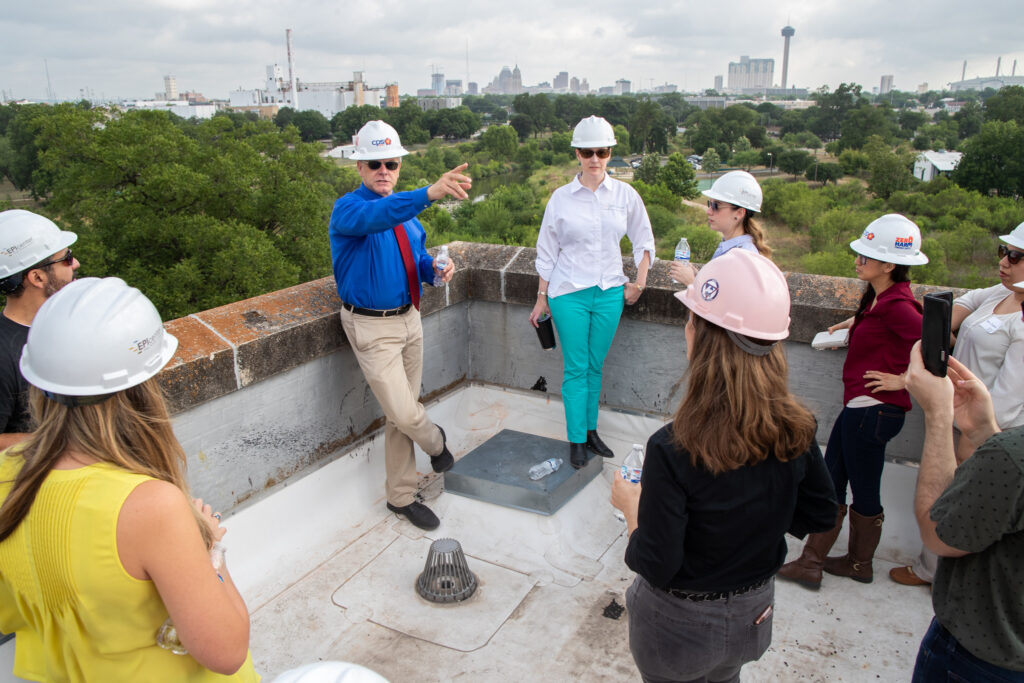
Photo credit: Vincent Michael
Advocacy
The National Preservation Partners Network advocates for issues that have national significance or impact. Examples include federal regulations and laws, federal policies and recommendations, Executive Orders, and court cases that directly impact or by precedent impact beyond a local level. All advocacy actions taken follow our Advocacy Policy.
This Is Historic.
As historic preservation groups mark milestones in the history of our country and the movement, we face unprecedented federal challenges to historic places, narratives, and policies. Whether celebrating or advocating, we’ll make the most of our efforts if we speak with a unified voice.
We can do that with This Is Historic, a simple tagline chosen by a national coalition of preservation organizations among more than 90 submissions.
Add This Is Historic to your messaging throughout the year and beyond. It’s flexible enough to use however it works for you (see examples):
- Mark this moment in our history
- Celebrate historic places, people, events, in your community
- Advocate for programs, places, policies, and narratives compromised by the federal government
Learn More and Download the This Is Historic Toolkit
NPPN Joins Coalition of Nonprofit Organizations to File Amicus Curiae Brief in White House Ballroom Case
May 27, 2026
Eleven national and local nonprofit organizations devoted to architecture, landscape, historic preservation, planning, and National Parks stewardship have joined together in filing an amicus curiae (“friend of the court”) brief supporting the National Trust for Historic Preservation in its lawsuit over the proposed White House Ballroom. The litigation challenges the Trump Administration’s demolition of the White House East Wing and ongoing construction of a massive new ballroom structure on the historic White House grounds, a designated National Park.
A preliminary injunction granted to the National Trust by U.S. District Court Judge Richard Leon on March 31, 2026, has been stayed by the U.S. Court of Appeals for the District of Columbia Circuit pending an appeal by the Trump Administration. A hearing before a panel of the Circuit Court is scheduled for Friday, June 5, 2026.
In the brief, the amicus organizations make a number of points, including the following:
– Each president is but a temporary steward of the White House, and no president has the inherent right to destroy any portion of the White House complex or undertake a huge construction project such as this without obtaining express approval from the Congress. No such authority has been granted in this case.
– The historical record shows that virtually every other major White House project over the years has been carried out with approval and engagement by Congress. The Administration’s attempt to evade or usurp this authority should not be allowed to succeed.
– Despite the government’s recent assertions, the case is not about national security. It is simply about whether the President has complied with the law in his longstanding quest to construct a massive ballroom structure at the White House.
– The fact that private donors are supposedly paying for the project does not give the President any special authority to carry it out.
– The White House and its surrounding cultural landscape constitute a National Historic Landmark of highest significance to the nation, as well as a designated National Park. Not only has the Administration failed to secure basic congressional approval for this project, but it has also ignored planning and preservation standards and principles specifically established to ensure that changes to the White House and its grounds respect its cultural and historic values.
– Given the significant issues brought in this case, the balance of equities, and the likelihood that the National Trust will ultimately prevail on the merits, the Court of Appeals should reinstate the preliminary injunction and halt further construction of the ballroom project.
The 11 organizations participating as amici curiae include the following:
The American Institute of Architects
The American Society of Landscape Architects
The Association for Preservation Technology International
The Coalition to Protect America’s National Parks
The Committee of 100 on the Federal City
The Cultural Landscape Foundation
The DC Preservation League
The National Mall Coalition
The National Preservation Partners Network
The Olmsted Network
The Society of Architectural Historians
National Preservation Partners Network
Statement on Recent Federal Actions Impacting Historic Preservation
March 20, 2025 – As a community of historic preservation nonprofit organizations across the U.S., the National Preservation Partners Network is deeply concerned about federal actions that have already damaged—and could easily destroy—efforts to tell America’s story through our shared cultural heritage.
The processes, tools, and services mandated by the 1966 National Historic Preservation Act have been strongly supported by every administration since its creation. Why? Historic places matter to the American people. They help define who we are as Americans. They anchor communities across the nation: rural and urban, thriving and surviving, red and blue. Everyone can find a historic place of meaning and memory, a place that connects us with our shared past and with each other. A common concern for preserving our history, and the places where that history occurred, has brought citizens and communities together and helped create the national historic preservation infrastructure we rely on today.
The National Historic Preservation Act established a comprehensive program to protect historic and archeological sites. It created the National Register of Historic Places, the Section 106 review process, the Section 110 program, the Advisory Council on Historic Preservation, State Historic Preservation Offices, and the Historic Preservation Fund. These initiatives have served the nation well for nearly six decades
The economic and community benefits of preserving and reusing historic places are supported by irrefutable data demonstrating that modest federal investment generates strong federal and local tax revenue and creates thousands of good jobs. Using historic places to illustrate the unique impact of both everyday and exceptional Americans brings us together, educates and inspires us, and fosters civic pride in the places we all call home.
The Partners Network is concerned that unprecedented actions and positions taken by the Trump administration since January 2025 reflect a misunderstanding of what preservation is about, the benefits it provides, and the mechanisms in place to support this cost-effective public benefit. The administration’s staffing, funding, and policy changes and proposals will not save money. In fact, they will cost us dearly—financially, socially, and historically.
Despite decades of bipartisan support, the national historic preservation infrastructure is highly threatened by recent actions by the administration, including:
Drastic cuts to staffing and funding at the National Park Service—The central federal agency supporting historic preservation has suffered severe reductions in staffing and funding, undermining preservation efforts nationwide. This in turn jeopardizes historic rehabilitation projects that create jobs, provide housing, and revitalize communities. Without adequate resources, the programs mandated by Congress to facilitate historic preservation will falter, leaving critical initiatives unsupported.
Freezes and cuts to multiple sources of federal preservation funding, including the Historic Preservation Fund—these funding streams are essential for government agencies and nonprofits working to save America’s historic places. Uncertainty or reductions in these funds have already stalled or endangered vital projects across the country.
Executive Orders and policy changes curtailing efforts to preserve and share the history of underrecognized communities— Efforts to ensure that all Americans see their history reflected in our preserved heritage are critical to national unity and identity. Weakening these initiatives risks leaving important stories untold and communities unseen.
The declaration of a “National Energy Emergency” despite record-high American energy production—This action has disrupted the Section 106 review process, which is crucial for protecting historic resources, and has added delays and costs to public and private projects across the country.
The dismissal of appointed leadership at the Advisory Council on Historic Preservation—Without appointed leadership, and the ability to even act, this independent agency cannot meet its federally mandated responsibilities.
Staffing cuts at the General Services Administration—These reductions greatly hinder the agency’s ability to protect historic federal buildings that belong to the American people.
The censure and erasure of American history through the removal of language, websites, archives, and other resources that belong to the American people and tell our full story.
We do not oppose greater efficiency. Yet the seemingly haphazard approach to terminating experienced personnel, freezing or discontinuing committed preservation funding, and selling publicly treasured properties without stakeholder input, will result in a loss of historic places valued by local communities across the country.
We urge the administration and Congress to take immediate action to reinstate the funding and staffing essential for protecting our nation’s historic and cultural assets.
We also call upon them to reverse actions that have weakened the Advisory Council on Historic Preservation and disrupted efforts to document and celebrate the history of underrepresented communities.
We urge all citizens who value historic preservation to contact their federal representatives and advocate for the restoration of critical programs and resources.
Advocacy Resources
- Visit Preservation Action to sign up for legislative updates, learn how to lobby, and read briefing papers.
- Visit the National Conference of State Historic Preservation Officers to learn about the Historic Preservation Fund, the Economics of Historic Preservation, and how SHPOs carry out the work of the national historic preservation program.
- Visit the National Trust for Historic Preservation’s Advocacy Resource Center for updates on federal policy, information on appropriations, state tax credit guides, lobbying, and more.